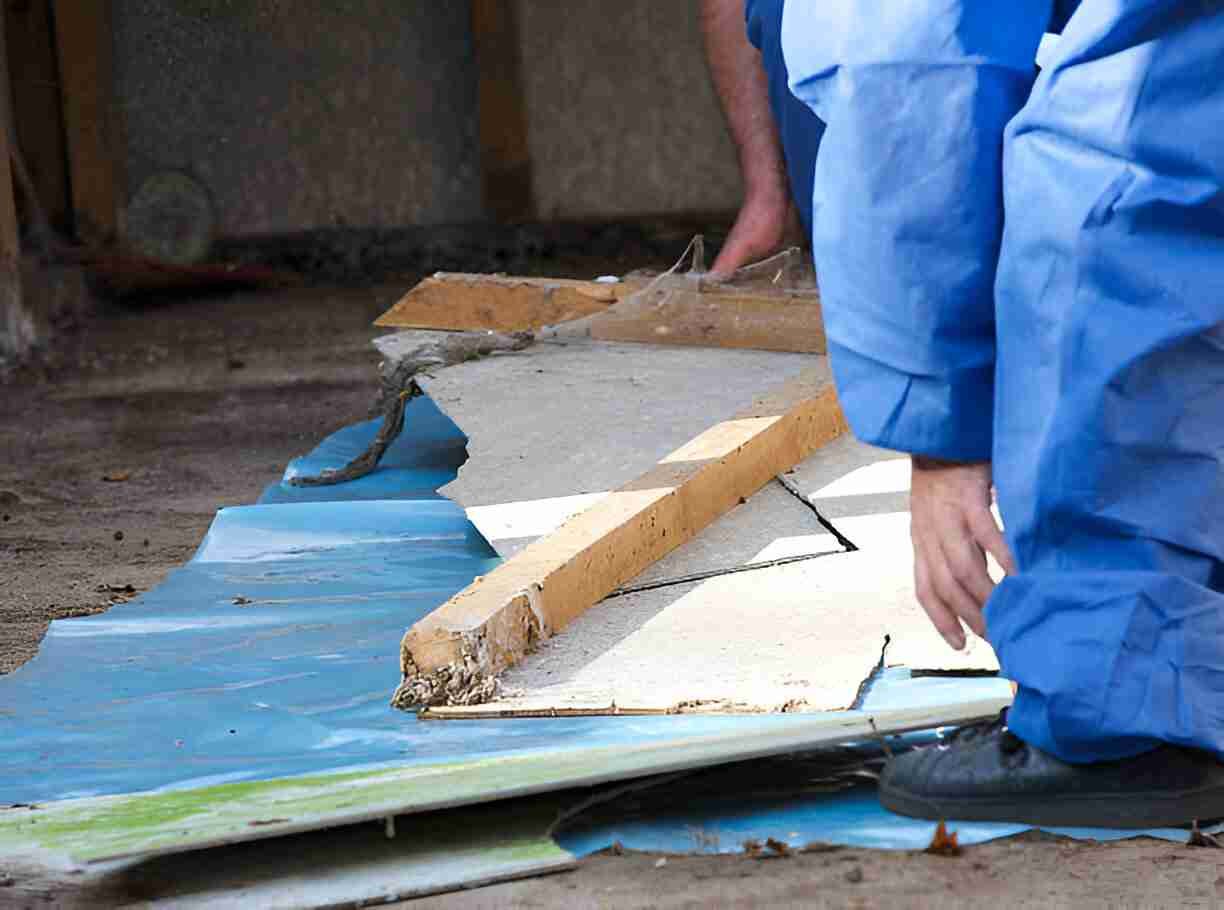
An asbestos management survey acts as a formal process that identifies asbestos-containing materials within occupied and operational buildings. The survey process focuses on materials that remain accessible during standard use and routine maintenance. Property controllers structured inspection records to maintain awareness of material condition and exposure risk. Industry safety guidance positions formal asbestos inspection activity as a foundational compliance requirement for non-domestic buildings and shared residential spaces. Health authorities consistently report asbestos exposure as a major contributor to occupational disease across maintenance and construction sectors. Research published by national safety regulators confirms that unmanaged asbestos continues to present long-term health risks where building materials remain undocumented. A verified inspection record supports ongoing monitoring and clear risk communication across operational teams. Facilities teams depend on documented survey findings to guide maintenance planning and emergency response procedures. Independent laboratory analysis supports accurate material identification and classification under accredited standards. Professional oversight ensures that inspection findings remain reliable and suitable for regulatory inspection. The survey process functions as a preventive safety measure rather than a reactive response.
Key Takeaways
- Surveys form the foundation for identifying risky materials in buildings
- Accurate documentation supports informed maintenance and refurbishment decisions
- Regular inspection updates maintain safety and regulatory compliance
- Risk assessment helps prioritize areas requiring immediate attention
- Professional expertise ensures reliable evaluation and reporting
- Integration with safety management systems strengthens operational oversight
- Clear reporting improves communication across teams and contractors
- Condition monitoring reduces the chance of accidental exposure
- Strategic planning supports long-term asset management and sustainability
- Formal certification provides evidence of completed inspection and oversight
Regulatory Framework Supporting Survey Practices
The asbestos management survey aligns with statutory responsibilities defined under national safety regulations. Duty holders carry responsibility for asbestos risk identification and control across applicable buildings. Documented survey evidence demonstrates compliance with regulatory expectations across regulated premises. Official guidance issued by safety authorities outlines survey scope, inspection method, and reporting structure. Enforcement data from regulatory highlights incomplete asbestos documentation as a frequent cause of compliance failure. Legal commentary from environmental law publications confirms that survey records form the primary defense during enforcement reviews. Survey activity supports adherence to workplace safety policies and internal governance standards. Public sector audits consistently reference asbestos survey records during compliance evaluations. Survey documentation also supports insurance validation and structured risk assessment processes. Professional associations emphasize that survey accuracy and accessibility remain critical for regulatory confidence. Survey records operate as a central element within the legal responsibility to manage asbestos risks.
Operational Role of Property Surveys in Maintenance Management
The survey process supports the safe execution of routine maintenance activities. Maintenance teams consult survey registers before undertaking intrusive or surface-level works. Survey records identify material location, product type, and surface condition to reduce accidental disturbance. Construction safety research demonstrates that access to verified asbestos data reduces exposure incidents during maintenance tasks. Survey findings integrate into document systems and contractor induction procedures. Facilities management publications highlight survey-driven planning as a method that reduces unplanned service disruption. Survey documentation also supports asset lifecycle planning. Property managers use survey data to prioritize remediation or encapsulation strategies. Survey records inform long-term renovation planning and sustainability upgrades. Operational reliance on structured survey data reflects its value as a decision support tool across diverse property portfolios.

Documentation and Reporting Standards within Asbestos Control Programs
Documentation produced through an asbestos management survey provides a structured foundation for effective risk control across occupied grounds. The asbestos survey report presents a clear record of asbestos-containing materials through detailed registers, location mapping, and material condition descriptions. Professional guidance from recognized safety authorities emphasizes consistency, clarity, and traceability within asbestos registers to support accurate interpretation. Survey documentation remains accessible to duty holders, facilities teams, and appointed contractors to support safe decision-making. Digital reporting systems now support controlled access, secure storage, and version tracking for survey records, which strengthens governance and accountability. Occupational hygiene research consistently demonstrates that clear asbestos documentation improves risk communication and reduces accidental disturbance during maintenance activity. The survey report also includes structured risk scoring frameworks that guide prioritization and action planning. Laboratory analysis carried out under accredited conditions supports material identification and classification accuracy. Reporting formats align with established guidance to maintain consistency across property portfolios. Effective documentation supports inspection readiness and strengthens compliance confidence during regulatory review
Survey Certification and Compliance Assurance Framework
An asbestos management survey certificate acts as formal confirmation that a compliant survey has taken place. The certificate accompanies the full asbestos survey report and summarizes key inspection details for governance review. Regulatory inspectors often request certificate evidence during site inspections as proof of the duty holder’s awareness. Legal professionals rely on asbestos survey certificates during property transactions, lease negotiations, and asset transfers. Industry publications within the commercial property sector describe asbestos certification as a routine element of due diligence procedures. The asbestos management survey certificate confirms survey scope, inspection coverage, and surveyor competence through accreditation details. Facilities governance teams monitor certification status to maintain compliance oversight and audit readiness. Professional guidance clarifies that certification confirms survey completion rather than continuous asbestos control. Ongoing management actions remain necessary to address identified risks beyond certificate issuance.
Integration of Asbestos Survey into Safety Management Systems
The asbestos survey integrates directly into wider health and safety management frameworks across organizations. Safety policies reference documented asbestos findings during hazard identification and risk assessment processes. Risk registers incorporate asbestos data to support prioritization and mitigation planning. Emergency response documentation of asbestos locations identified through survey records to support informed decision-making during incidents. Fire safety research highlights asbestos during thermal exposure, reinforcing the need for integrated planning across safety disciplines. Procurement procedures reference verified asbestos data during contractor selection and method statement review. Construction law publications confirm that transparent asbestos disclosure reduces contractual disputes and liability exposure. Integration ensures documented asbestos data remains actionable across operational departments. Structured communication pathways support awareness among maintenance teams and contractors. A coordinated approach strengthens overall risk control and improves organizational safety culture.
Review and Update Protocols for Asbestos Managing Survey Records
The asbestos management survey requires regular review to maintain accuracy and relevance. Review triggers include visible material deterioration, maintenance intervention, or building alteration. Regulatory guidance recommends routine visual reassessment to confirm the material condition remains stable. Occupational exposure research links degraded asbestos materials with increased fiber release potential. Survey reviews update asbestos registers to reflect current site conditions and risk profiles. Facilities management guidance recommends alignment between review schedules and inspection programmers to maintain consistency. Review records demonstrate proactive risk control during regulatory inspections. Trend analysis based on review findings supports informed remediation planning and prioritization. Survey updates ensure that asbestos survey records reflect current operational realities. A structured review process prevents documentation from becoming outdated. Ongoing review reinforces the asbestos management survey as an active management tool rather than a static record.
Professional Competence and Quality Standards in Asbestos Survey Delivery
Quality within a survey depends on professional competence and adherence to recognized standards. Surveyors require appropriate training and accreditation to conduct asbestos inspections accurately. Accreditation bodies establish performance criteria that govern survey methodology and reporting quality. Industry audit findings consistently show that accredited professionals deliver reliable and repeatable survey outcomes. Laboratory analysis supporting asbestos identification follows strict quality control and chain of custody protocols. Professional development supports up-to-date knowledge of material types, inspection techniques, and regulatory expectations. Quality assurance frameworks include internal review, peer assessment, and periodic audits. The asbestos management reflects both technical expertise and procedural discipline. Competence assurance strengthens confidence among duty holders, insurers, and regulators. Professional standards underpin the credibility and effectiveness of asbestos management survey outcomes.
Strategic Value of Asbestos Management for Long-Term Asset Control
Strategic decision-making across property portfolios relies on accurate asbestos data and structured insight. Asset controllers operating under Asbestos management survey London guidance depend on detailed survey records to plan phased remediation and material management strategies. Long term investment planning relies on a clear understanding of asbestos risk profiles aligned with current Asbestos management survey requirements issued by regulatory authorities. Built environment research links early asbestos identification with reduced disruption during refurbishment programs and planned upgrades. Survey-informed planning supports structured forecasting and coordinated project sequencing, which allows organizations to evaluate Asbestos survey cost considerations through defined scope and access conditions. Sustainability objectives benefit through informed material replacement decisions supported by verified documentation. Governance teams reference the asbestos management survey certificate to demonstrate formal inspection status and structured oversight. Continuous oversight supported by maintained survey records enhances operational resilience across asset portfolios. Stakeholder confidence improves where asbestos risks remain clearly documented, certified, and effectively managed through reliable survey insight.
Ongoing Support and Advisory Pathways for Asbestos Survey Needs
Asbestos management survey requirements vary according to building function, occupancy patterns, and operational complexity. Professional survey providers offer advisory support tailored to specific premises and management responsibilities. Duty holders benefit from expert interpretation of survey findings and recommended actions. Regulatory guidance encourages engagement with competent professionals for complex asbestos scenarios. Direct consultation supports clarity on survey scope, review expectations, and documentation standards. Advisory pathways assist alignment with current regulatory frameworks and industry guidance. Professional support also assists during audits, renovation planning, and compliance reviews. Clear communication with survey specialists strengthens confidence in asbestos management strategies. For project-specific clarification, contact with an experienced asbestos survey team provides accurate and practical guidance aligned with compliance obligations

Asbestos management survey cost factors influencing project planning decisions
Asbestos management survey cost considerations form part of structured compliance planning across regulated premises and operational environments. Organizations operating under Asbestos management survey London guidance assess the survey scope in line with Asbestos survey requirements defined by safety authorities and enforcement bodies. Cost evaluation links to building size, access conditions, occupancy patterns, and material complexity identified during preliminary review. Survey scope directly influences professional time allocation, sample analysis requirements, and reporting depth aligned with compliance expectations. Accredited laboratory involvement supports verified material classification and contributes to overall survey value rather than isolated pricing factors. Documentation format and register detail also influence assessment, especially where controlled digital access and audit-ready reporting apply. Industry publications note that clear planning reduces unexpected scope variation and supports predictable survey outcomes. Risk profile assessment remains central, as higher-risk materials require detailed evaluation and prioritization frameworks. Stakeholder coordination requirements can influence survey effort, particularly where multiple duty holders rely on shared documentation. Governance teams reference the asbestos survey certificate to confirm inspection status and regulatory alignment. Professional guidance consistently advises direct consultation with a competent survey provider to clarify scope, compliance obligations, and documentation standards without reliance on assumptions.
| Survey Type | Typical Cost Range | Scope Summary |
|---|---|---|
| Small buildings survey | £200 – £400 | Basic inspection and material register |
| Medium premises survey | £400 – £700 | Wider inspection with sampling and reporting |
| Large or complex premises survey | £700 – £1,200 | Full coverage with detailed risk scoring |
| Occupied building survey | £500 – £1,000 | Phased access and coordination controls |
| Review or update the survey | £150 – £350 | Condition check and register update |
Cost level varies based on scope, access conditions, and reporting requirements. For accurate clarification aligned with Asbestos management survey requirements, consultation with a qualified survey team provides reliable guidance and appropriate documentation support.
Frequently asked questions.
Conclusion
Effective asbestos management relies on accurate surveys, clear documentation, and adherence to Asbestos management survey requirements. Understanding scope, site complexity, and potential risks helps organizations plan efficiently and manage Asbestos management survey cost considerations. Survey records, supported by an asbestos survey certificate, provide formal confirmation of inspection and compliance. Integration of survey findings into safety systems enhances operational resilience and supports maintenance, refurbishment, and long-term asset planning. Regular reviews ensure material conditions remain current and risks are controlled. Consulting qualified professionals ensures survey processes align with regulations, optimize safety, and maintain stakeholder confidence across buildings, including those covered by Asbestos management survey London guidance.