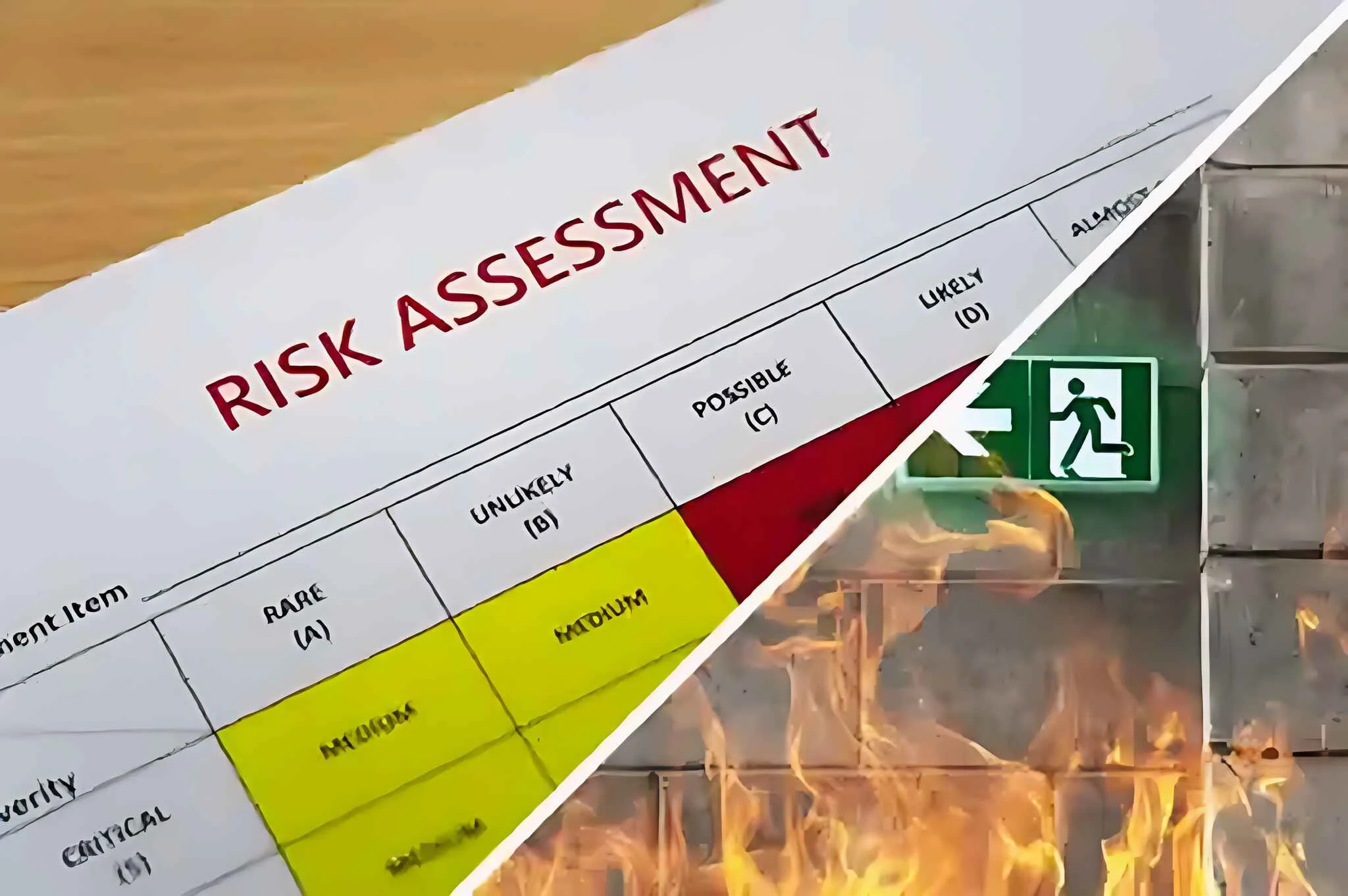
Landlords across the capital must understand how the fire risk assessment London requirements in London affect rental properties. Legal responsibility applies to property owners and managing agents without exception. London presents unique challenges due to dense housing, mixed-use buildings, and older construction. Statistics from the London Fire Brigade report more than 18,000 fire-related incidents every year across Greater London, which highlights the scale of risk. National Home Office data confirms that urban areas show higher casualty rates compared to rural regions. Fire risk assessment compliance exists to reduce injury, loss of life, and property damage.
The enforcement structure expects written evidence during inspections or after complaints. Courts treat missing or outdated fire risk assessment documentation as a serious breach of responsibility. Insurance providers often review compliance status after incidents, which increases financial exposure when records are absent. Tenant expectations also continue to rise, as safety remains a deciding factor in rental choices according to housing charity surveys. FRA processes help identify risk early and guide corrective actions. Professional support plays a vital role where property layouts or occupancy levels create complexity. Guidance issued by the London Fire Brigade and the Ministry of Housing continues to evolve, which supports the need for ongoing review rather than one-time completion.
Key Takeaways
1. Landlords remain legally responsible for maintaining safe conditions within all shared and controlled areas of a property
2. Regular review cycles help identify developing hazards before they escalate into serious safety or legal issues
3. Clear and accurate documentation supports compliance and provides strong evidence during inspections or investigations
4. Older properties often contain concealed risks that require detailed attention and professional evaluation
5. Escape routes must remain unobstructed, well-lit, and clearly identifiable to support safe evacuation
6. Fire detection and warning systems require routine testing and recorded maintenance to remain effective
7. Emergency lighting plays a vital role during power failure and supports visibility along escape paths
8. Any structural or layout changes require prompt reassessment to confirm continued safety performance
9. Tenant safety concerns frequently prompt official inspections and increased enforcement activity
10. Enforcement notices can disrupt rental income and create immediate operational challenges
Why Should Landlords Care About the Fire Risk Assessment London Requirements?
Fire risk assessment London requirements carry enforceable legal authority. Penalties extend beyond financial sanctions and include enforcement notices, prohibition orders, and criminal prosecution. Data from the National Fire Chiefs Council confirms that rented accommodation accounts for a significant proportion of residential fires nationwide. Responsibility is directly to landlords regardless of property size. Insurance claims often face scrutiny when fire risk assessment documentation fails to meet standards. Housing research shows that tenants prefer properties with clear safety measures in place. Fire damage leads to extended vacancy periods and costly repairs, particularly within competitive London rental markets. Fire risk assessment requirements support long-term asset protection and reputational stability. Compliance reduces uncertainty during inspections and after incidents. Specialist guidance assists landlords in interpreting borough-specific expectations. Preparation and documentation reduce enforcement risk. FRA should remain an essential part of the property management strategy rather than a reactive obligation.
How Local Councils Enforce Fire Safety Rules
Local councils across London maintain active enforcement programs in collaboration with the London Fire Brigade. Inspection data from borough reports shows targeted checks in high-risk areas. HMOs and converted buildings receive priority due to shared facilities and higher occupancy levels. Tenant complaints often trigger inspections and document requests. Fire risk assessment London records must remain accessible and current. Improvement notices specify required actions within defined timeframes. Prohibition notices restrict occupancy immediately where a serious risk exists. Public registers list non-compliant landlords, which affects reputation and tenant trust. Professional advice supports compliance before enforcement increases. Visit with councils remains more effective when documentation meets expected standards. FRA expertise reduces enforcement disruption and supports cooperative resolution.
Why London Properties Face Higher Fire Risk Levels
London properties face elevated fire risk due to environmental and structural factors. Population density increases the explosion chance and the fire spread potential. London Fire Brigade statistics show higher incident frequency in inner boroughs. Older housing stock often includes outdated electrical systems and limited compartmentation. Converted flats share services that increase risk transmission. High tenant turnover raises misuse probability. Research from housing safety organizations links overcrowding with faster fire spread. Traffic congestion delays emergency response times. Tall buildings complicate evacuation procedures. Fire risk assessment London evaluations identify location-specific risk that generic approaches often miss. Tailored controls address layout, occupancy, and access challenges unique to London. Local conditions require structured assessment rather than assumption-based decisions.
How does a Fire Risk Assessment Protect People and Property?
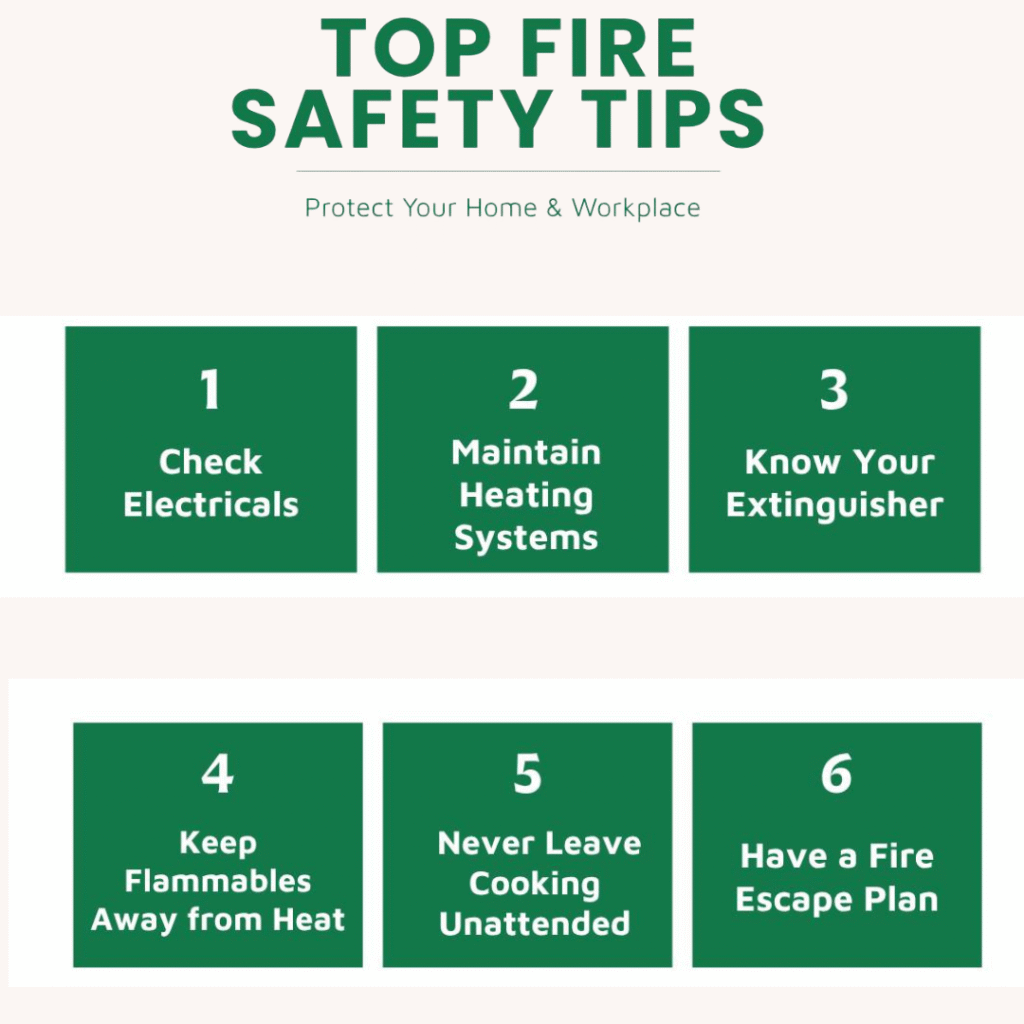
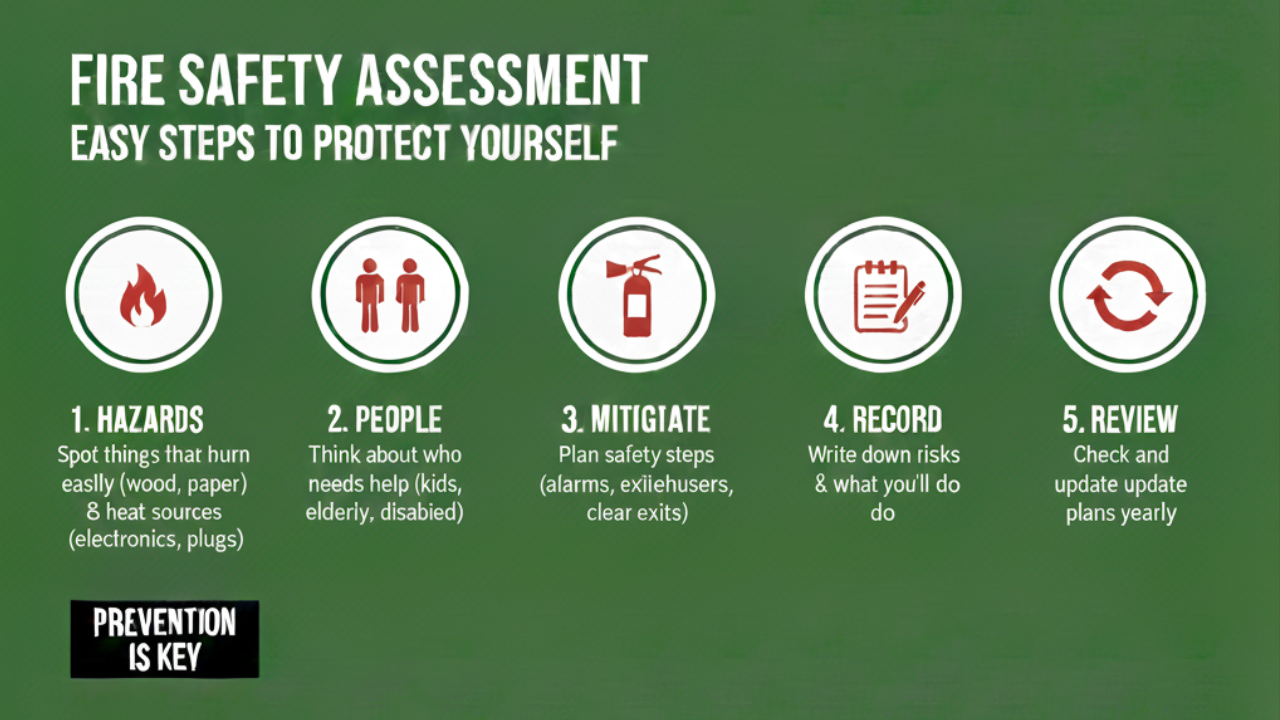
A fire risk assessment identifies risk, evaluates risks, and recommends control measures. The process focuses on prevention, detection, and safe evacuation. Home Office statistics confirm that early detection and planning reduce casualty rates significantly. Agents and regulators expect formal documentation rather than informal checks. Fire risk assessment London records demonstrate due diligence during inspections and legal review. Assessments guide prioritized improvements rather than reactive responses. Safer properties attract stable tenants and reduce turnover. Legal cases across London show higher penalties after incidents without documented assessments. Professional involvement improves accuracy where layouts or occupancy patterns add complexity. Fire risk assessment supports consistent safety management and long-term compliance.
Which Areas and Risks are Included in a Fire Risk Assessment
A fire risk assessment covers several critical elements. Hazard identification examines ignition sources, fuel loads, and oxygen availability. Risk evaluation considers residents, visitors, and vulnerable occupants. Fire risk assessment in London reviews alarm systems, detectors, and manual call points. Escape routes receive a detailed assessment for width, lighting, and signage. Emergency lighting functionality forms part of the review. Fire doors and compartmentation integrity receive close inspection. Management procedures such as maintenance schedules and testing records also require evaluation. Reports document findings and recommend corrective actions. Action plans prioritize risk reduction. Fire risk assessment London documents require regular review after changes to layout or occupancy. Most landlords operating shared residential buildings require a fire risk assessment. Residential fire risk assessment of blocks of flats with communal areas. HMO fire risk assessment responsibilities for shared houses with multiple occupants. Landlord fire assessment responsibilities extend to the common parts under control. Mixed-use buildings with commercial units also fall within scope. Single private dwellings without shared areas often fall outside requirements, although confirmation remains advisable. Professional advice clarifies applicability for complex properties. Fire risk assessment London should remain standard practice wherever shared spaces exist.
Fire risk assessment London cost varies across properties due to differences in size, layout, and overall risk profile. Residential blocks, HMOs, and mixed-use buildings each require a different level of inspection detail, which directly influences fire risk assessment and London cost expectations. London properties often include older construction, shared escape routes, and higher occupancy levels, all of which increase assessment scope. Industry research from fire safety consultancies shows that more complex buildings require longer inspection time and more detailed reporting, which affects fire risk assessment cost outcomes. Higher-risk properties also require enhanced documentation to meet London Fire Brigade and local council expectations. Fire risk assessment cost should therefore reflect professional time, assessor competence, and reporting quality rather than a generic figure.
Fire Risk Assessment London Cost Explained for Landlords
| Property type | Typical description | Assessed price range |
| Single small block | Up to 3 storeys and basic communal areas | £150 – £300 |
| Medium residential block | 4 to 6 storeys and shared systems | £300 – £600 |
| Large residential block | Over 6 storeys and a complex evacuation | £600 – £1,200 |
| HMO property | Shared kitchens and high occupancy | £250 – £500 |
| Converted residential building | Older layout and altered compartmentation | £350 – £750 |
| Mixed-use residential building | Residential and commercial interface | £500 – £1,000 |
| High-risk or regulated buildings | Prior notices or complex risk profile | £800 – £1,500 |
How does a Professional Fire Risk Assessment Process Work
A professional fire risk assessment process follows a defined structure. Assessors conduct an on-site inspection of communal areas and systems. Document review: check existing records and maintenance logs. Risk identification considers layout, usage, and occupant vulnerability. Control measures receive evaluation against legal standards. Assessors produce a written report that outlines findings and priorities. Recommendations align with current fire safety, legal, and guidance. Follow-up support often includes clarification on implementation steps and queries related to fire risk assessment in London, through direct contact rather than published figures. Accredited professionals assure recognized qualifications. Professional fire risk assessment London services support compliance and safety.
What do inspectors look for during assessments?
Inspectors focus on clear evidence of risk control. Attention goes first to explosion sources such as electrical systems and heating devices. Inspectors then check combustible materials stored within common areas. Escape routes receive scrutiny for obstruction, width, and visibility. Fire detection systems undergo checks for coverage and audibility. Emergency lighting functionality forms another priority. Inspectors also assess fire door condition and self-closing performance. Management procedures receive equal importance. Records for alarm testing, emergency lighting checks, and maintenance schedules must remain available. London Fire Brigade inspection guidance highlights documentation quality as a frequent compliance gap. National enforcement data shows that incomplete records contribute to a high percentage of enforcement notices. Inspectors also evaluate occupant risk profiles, especially in buildings with vulnerable residents. Clear signage and evacuation guidance remain essential expectations. Fire risk assessment London inspections aim to confirm that the identified risk matches the implemented controls. Consistency between report findings and on-site conditions matters greatly. Professional preparation reduces inspection friction and supports a positive outcome.
How do Reports Help Landlords Stay Compliant?
Fire risk assessment London reports serve as formal evidence of compliance. Reports document risk, evaluate risk levels, and outline corrective actions. Enforcement authorities write reports during inspections and investigations. Clear prioritization within reports supports timely action. Home Office research confirms that structured reporting reduces repeat enforcement cases. Reports also support communication with contractors and managing agents. Maintenance tasks become easier to track through documented recommendations. Insurance providers often request reports after incidents. Absence of clear reporting increases dispute risk. Fire risk assessment London reports also support long-term planning. Periodic review dates guide future updates. Courts consider report quality during legal proceedings. Detailed documentation demonstrates reasonable steps toward safety. Professional reports reduce ambiguity and interpretation errors. Accurate reporting strengthens compliance confidence across all London boroughs.
Why Professional Assessors Reduce Legal Risk
Professional assessors bring technical knowledge and regulatory awareness. Fire risk assessment regulations evolve through legislation and guidance updates. Professional assessors stay aligned with current standards. Competent assessors identify risks that non-specialists often overlook. London Fire Brigade case studies highlight errors within self-assessed properties.
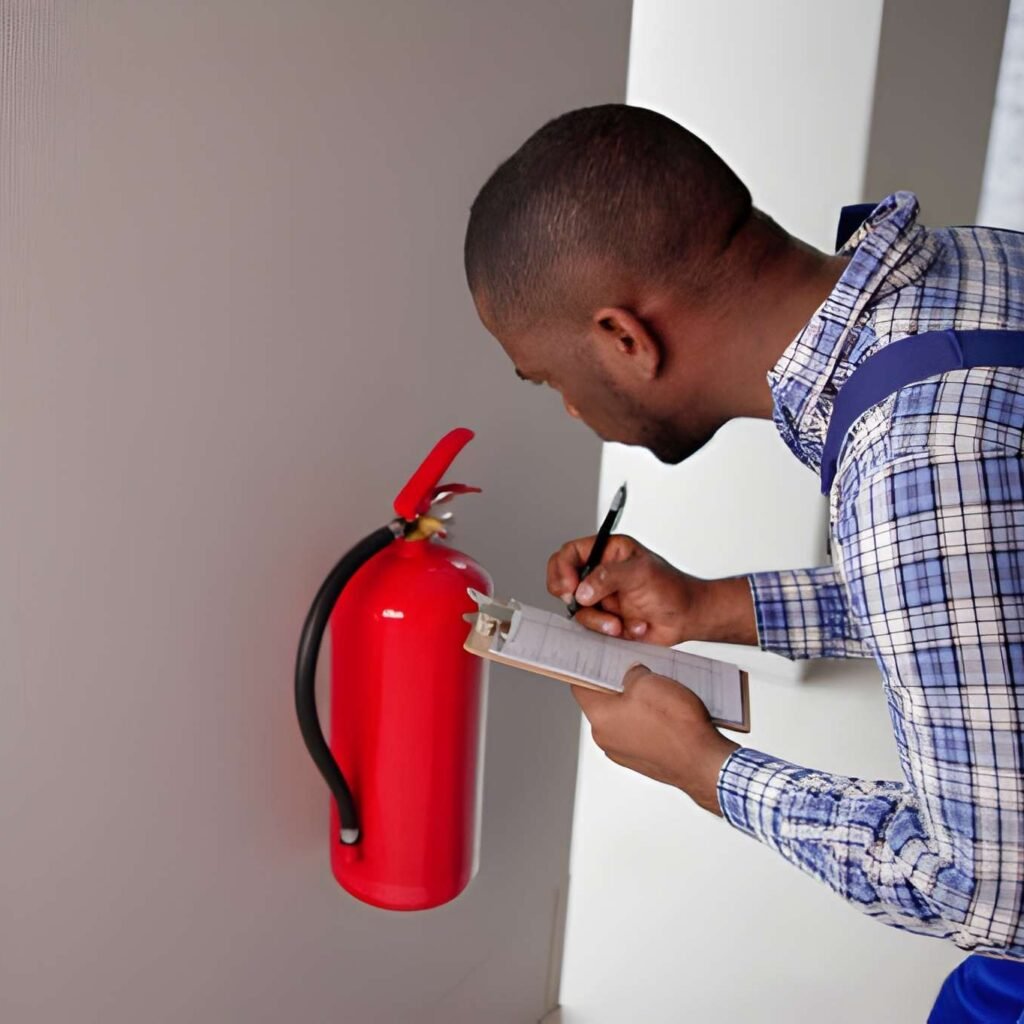
Professional assessment reduces omission risk. Courts often consider assessor competence during prosecutions. Reports prepared by accredited professionals carry greater credibility. Professional assessors also provide clear action plans. Clarity reduces delay and misinterpretation. Professional fire risk assessment London services also support defense against enforcement escalation. Reduced uncertainty leads to stronger compliance outcomes. Legal exposure decreases when assessment quality meets recognized benchmarks.
Which London Properties Require Specialized Fire Risk Assessments
Certain London properties require specialized fire risk assessment approaches due to layout, occupancy, or usage. High-density residential buildings present complex evacuation challenges. Converted properties often include shared services and altered layouts. HMOs introduce higher occupancy loads and varied residents. Mixed-use buildings combine residential and commercial risks. London borough data confirms higher incident rates within such properties. Specialized assessment considers building height, compartmentation, and access limitations. Fire risk assessment frameworks should be applied to property types rather than uniform standards. Professional input becomes essential where standard guidance lacks clarity. Specialized assessments address structural features and management complexity. Tailored control measures improve effectiveness. Regulatory bodies expect enhanced scrutiny for higher-risk properties. Specialized fire risk assessment London services support accurate evaluation and compliance.
Why Residential Fire Risk Assessment in London Differs from Commercial?
Residential fire risk assessment London focuses on sleeping risk and evacuation capability. Residential occupants remain less alert during night hours. Fire spread consequences increase within sleeping accommodations. Commercial assessments often assume staff training and supervision. Residential settings lack controlled patterns. London Fire Brigade statistics show higher fatality rates within residential fires. Residential assessments prioritize early detection and protected escape routes. Management control differs due to tenant turnover. Commercial assessments focus more on workplace processes. Residential buildings require stronger compartmentation and alarm audibility. Distinct risk profiles justify different assessment approaches.
What HMO Fire Risk Assessment London Involves
HMO fire risk assessment London addresses higher occupancy and shared facilities. Multiple households increase the explosion. Shared kitchens present elevated fire hazards. Escape routes require enhanced protection due to occupant numbers. London council guidance highlights HMOs as enforcement priorities. Fire detection coverage must extend across all shared areas. Emergency lighting requirements remain more stringent. Management procedures become critical due to varied resident awareness. HMO fire risk assessment reports often include stricter review intervals. Professional oversight supports compliance with licensing conditions. Accurate assessment reduces enforcement and licensing risk.
Why Fire Risk Assessment in South London Requires Local Expertise
Fire risk assessment in South London requires a detailed understanding of local building patterns and borough-specific risks. Housing stock across South London includes large numbers of Victorian terraces, post-war estates, and converted houses that present unique fire safety challenges. Older electrical systems remain common within many properties, which increases explosion risk according to the London Fire Brigade incident data. Borough reports also show a varied mix of low-rise housing and high-rise residential blocks, which creates contrasting evacuation and compartmentation requirements. Transport infrastructure influences emergency response access, especially in areas with narrow roads, rail corridors, and high traffic density. Fire risk assessment in East London frameworks must adapt to these physical and logistical conditions rather than common assumptions. Local authority enforcement approaches differ across South London boroughs, with some councils having stricter inspection cycles for shared accommodation and converted buildings. Professional assessors familiar with South London conditions understand how these enforcement patterns affect compliance expectations. Knowledge of local construction methods supports accurate identification of hidden risks within older properties. Familiarity with borough guidance improves report relevance and inspection outcomes. Fire risk assessment in South London benefits from local expertise that aligns safety controls with real-world conditions, which supports effective risk reduction, smoother inspections, and sustained compliance across diverse residential environments.