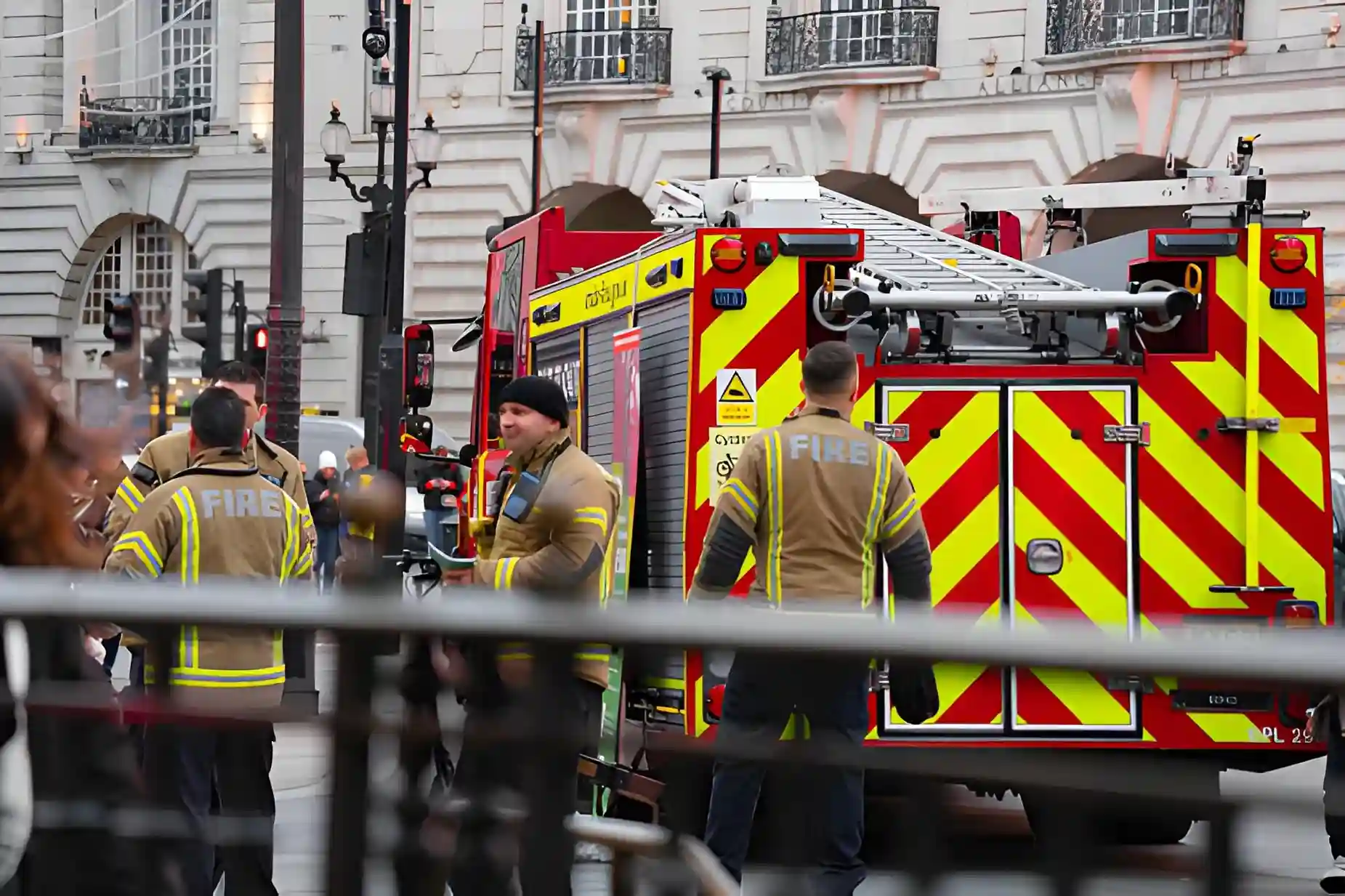
Property owners in London face serious legal obligations regarding fire safety.
Fire safety regulations require protection of occupants and visitors from fire risks.
A fire risk assessment London service helps identify dangers before they become disasters.
The Regulatory Reform (Fire Safety) Order 2005 makes property owners responsible for fire safety.
This legal requirement applies to all non-domestic properties and the common areas of multi-occupied residential buildings.
Systematic evaluations of properties must be conducted to remain compliant.
Key Takeaways
- Property managers are legally responsible for fire safety under the Regulatory Reform (Fire Safety) Order 2005.
- Fire risk assessments follow a five-step professional process from hazard identification to regular review.
- Over 17,000 fire incidents attended by London Fire Brigade in 2023 highlight the importance of prevention.
- Fire risk assessment London is mandatory for commercial buildings, HMOs, flats, and student accommodation.
- Effective reports clearly document risks, compliance status, and improvement actions.
- Assessments must be reviewed at least annually, or sooner after changes to the building or occupancy.
- Common failings include poor documentation, slow action on recommendations, and lack of staff training.
- HMOs have stricter fire safety requirements, including enhanced detection, escape routes, and lighting.
- Smart fire safety technology can significantly reduce false alarms and improve response times.
- Good preparation and accurate information are essential for reliable fire risk assessments.
Why Fire Risk Assessments Remain Essential for Properties
Understanding the critical role these assessments play becomes essential for all property owners. Fire risk assessment London services examine building vulnerabilities comprehensively. Experts evaluate potential ignition sources, fuel sources, and people at risk. Buildings contain numerous fire hazards that often go overlooked. Faulty electrical equipment, blocked escape routes, and inadequate fire detection systems pose serious threats. Professional assessors identify issues before they endanger lives. Statistics reveal the urgency of proper fire safety measures. The London Fire Brigade responded to over 17,000 fire incidents in 2023. Many of these emergencies could have been prevented through proper risk assessment and mitigation strategies.
How Does the Fire Risk Assessment Process Work?
A structured evaluation takes place when qualified assessors get hired. The process follows five key steps that ensure thorough examination of premises.
first step: Assessors examine properties for ignition sources. They check electrical systems, heating equipment, and smoking materials. Areas where combustible materials create danger become clearly identified.
second step: The assessment considers everyone who uses the building. Special attention goes to vulnerable individuals. Employees, visitors, contractors, and neighbors all require protection from fire threats.
third step: Experts analyze the possibility of fire occurrence. They calculate potential consequences and severity. Recommendations to eliminate or reduce identified hazards get provided.
fourth step: A comprehensive fire risk assessment report gets delivered. This document details all identified hazards and recommended improvements. The report serves as a roadmap for enhancing fire safety.
fifth step: fire risk assessment london does not represent a one-time task. Regular updates keep properties compliant and safe.
Which Properties Require Fire Risk Assessments in London?
Fire risk assessment London must be arranged for various property types. The legal requirement extends beyond commercial buildings to many residential situations. Commercial properties include offices and business premises. Restaurants and hospitality venues fall under this mandate. Warehouses and industrial facilities need regular evaluation. Educational institutions and healthcare facilities also require professional fire risk assessment London services. Fire risk assessment London services become mandatory for Houses in Multiple Occupation (HMOs). These properties house multiple tenants who share facilities. An HMO fire risk assessment evaluates communal areas, escape routes, and fire safety equipment. Blocks of flats require assessments for common areas. Hallways, stairwells, and shared facilities must be evaluated. Purpose-built student accommodation also falls under this requirement.

What Does a Comprehensive Fire Risk Assessment Report Include?
Detailed documentation gets provided after the fire risk assessment London process. A fire risk assessment report contains several critical components that guide safety improvements. The executive summary opens the report with an overview of findings. Immediate priorities and critical risks get highlighted. This section helps property managers understand urgent action items quickly. Property details get documented by assessors. The report describes construction type, occupancy levels, and current fire safety measures. A complete picture of the property’s fire safety baseline becomes available. Every potential fire source receives documentation in the risk identification section. The report lists electrical hazards, heating systems, and combustible materials. Building owners know exactly what creates risk in their properties. Each risk receives a risk rating during risk evaluation. Assessors classify risks as trivial, tolerable, moderate, substantial, or intolerable. Which issues need immediate attention becomes clear. The recommendations and action plan section provides specific improvement measures. Prioritized recommendations with implementation timelines get delivered. This guidance helps allocate resources effectively. Assessors indicate current regulatory compliance levels in the compliance status section. Property managers learn whether their buildings meet legal requirements. The report highlights areas needing improvement to achieve compliance.
How Often Should Fire Risk Assessments Get Updated?
Fire risk assessment London safety cannot be treated as a static requirement. Regular reviews keep assessments relevant and effective. Several factors determine review schedules. The Fire Safety Order recommends annual reviews as a baseline. Properties with significant foot traffic need more regular attention. Structural alterations or renovations trigger the need for reassessment. Changes in property use or occupancy require fresh evaluation. The introduction of new appliance or processes demands an updated assessment. Near-miss incidents or fire safety concerns necessitate immediate review. Changes in occupant numbers or demographics warrant reassessment. Installation of new fire safety systems requires verification through professional evaluation. Research from the National Fire Protection Association shows that regular assessments reduce fire incidents by up to 40%. Lives and property receive protection through consistent monitoring. Fire risk assessment London activity often follows these review triggers across residential and commercial buildings. Professional providers under FRA London standards align reassessment schedules with regulatory expectations. Documentation within a formal fire risk assessment report supports compliance reviews and enforcement checks. Market searches frequently reference HMO fire risk assessment cost and fire risk assessment price as comparison terms, though detailed figures depend on property scope and assessor engagement.
What Common Mistakes Do Property Owners Make?
Typical traps compromise fire safety when property owners lack awareness. Understanding these errors helps avoid dangerous oversights. Inadequate documentation represents a frequent problem. Many property owners fail to keep proper records. All assessment reports and action plans must be maintained. Documentation proves compliance during inspections. Some owners receive reports but delay implementing changes when ignoring recommendations. This approach creates legal liability and safety risks. Corrective actions should be prioritized based on risk severity. Assessments get attempted without proper training in some instances. While legally possible for competent persons, this approach often misses critical risks. Professional assessors bring expertise and objectivity that self-assessment cannot match. Fire safety appliance becomes useless without trained personnel. Staff must understand evacuation procedures and equipment operation. Regular fire drills reinforce knowledge and preparedness. Fire risk assessment London requirements continue to shape compliance expectations across residential and commercial buildings. Market guidance within FRA London highlights the need for a structured fire risk assessment London that reflects building type and occupancy. Sector discussions around HMO fire risk assessment cost and fire risk assessment price often focus on scope rather than figures. Direct consultation with an experienced assessment team provides clarity on obligations, documentation standards, and assessment depth aligned with regulatory expectations.
Why Choose Professional Assessors for London Properties?
Significant advantages come from expert fire risk assessment London services. Professional assessors bring qualifications, experience, and comprehensive knowledge to every evaluation. Qualified assessors understand London’s specific fire safety challenges. They know local regulations and building codes. Properties benefit from their familiarity with similar structures and requirements. External assessors provide unbiased analysis through objective evaluation. Honest feedback gets delivered without organizational blind spots. This objectivity ensures thorough risk identification that internal reviews might miss. Professional assessments demonstrate due diligence and provide legal protection. Regulatory compliance gets shown through qualified expert involvement. This documentation protects property owners during legal proceedings. Many insurers offer reduced premiums for professionally assessed properties. Money gets saved while safety improves. Insurance claims become easier with proper documentation in place. The Institution of Fire Engineers reports that professionally assessed buildings have 60% fewer fire incidents. Cost-effective investment in safety and compliance gets achieved through expert assessment.
What Special Considerations Apply to HMO Properties?
Additional requirements exist for Houses in Multiple Occupation. An HMO fire risk assessment London addresses unique challenges in shared living spaces. Enhanced detection systems become mandatory in HMOs. Comprehensive fire detection must be installed throughout. Interconnected alarms in individual rooms and common areas create necessary coverage. The system should wake sleeping occupants immediately. Multiple escape routes need to be provided in HMOs. Single escape routes are generally unacceptable. Assessors evaluate whether occupants can reach safety from any location within the building. HMO regulations mandate fire-resistant doors in specific locations. Bedroom doors and corridor doors must meet established standards. Regular inspection maintains door integrity and effectiveness over time. Emergency lighting should be installed in escape routes. This equipment guides occupants during power failures. Battery-powered lights ensure visibility during evacuations regardless of electrical system status. London councils report that 75% of HMO fire safety violations involve inadequate fire detection. Penalties get avoided through proper assessment and appliance installation that meets current standards.
How Do Fire Safety Regulations Impact Rental Properties?
Landlords in London carry significant responsibility regarding fire safety. Fire risk assessment London requirements protect tenants and property investments simultaneously Identified risks must be addressed to maintain habitability. Failure results in improvement notices or prohibition orders from local authorities. Tenants should receive fire safety information from landlords. They need to understand evacuation procedures and equipment locations. Clear communication reduces panic during emergencies and saves lives. All provided furniture must meet fire resistance standards under Furniture and Furnishing Regulations. Labels on items should indicate compliance with current requirements. Regular replacement maintains safety standards as materials age. Fire risk assessment London services examine gas and electrical systems closely. Annual gas safety certificates and periodic electrical inspections become necessary. These certifications prove safe installation and maintenance of critical building systems.

Fire Risk Assessment Price: What Property Owners Should Know
Property owners often seek clarity on fire risk assessment price before formal engagement. Clear expectations support planning and compliance. Regulatory guidance across England places emphasis on documented assessments for residential and commercial buildings. Official data from the Home Office reports over 27,000 dwelling fires recorded in a recent annual cycle, which reinforces the need for structured reviews. Market variations appear due to building size, occupancy type, and assessment depth. Professional assessors evaluate escape routes, ignition sources, and existing control measures. A written fire risk assessment report then supports legal duties under the Regulatory Reform Order. Property portfolios with shared areas often require broader review. Larger buildings demand extended site review and technical checks. Communication with a qualified provider allows tailored scope alignment. For precise figures and scope confirmation, direct contact with an assessment team offers accurate guidance aligned with property needs.
| Property Type | Price Range | Notes |
|---|---|---|
| Studio or one bedroom flat | £80 to £150 | Suitable for single occupancy units |
| HMO property | £150 to £300 | Covers communal escape routes |
| Small commercial unit | £200 to £400 | Based on floor area |
| Large commercial building | £400 to £800 | Site complexity affects range |
What Technology Improvements Enhance Fire Safety?
Modern solutions can be leveraged to improve protection levels. Technology advances make fire detection and suppression more effective than ever before. Modern alarms connect to smartphone apps through smart fire detection systems. Immediate alerts about potential fires get received by property managers. Remote monitoring allows faster emergency response when fires get detected. Advanced buildings link fire alarms to other safety features through integrated building systems. Ventilation can be automatically shut down and fire doors closed. These coordinated responses contain fires effectively and prevent smoke spread. Multi-sensor detectors reduce false alarms through heat and smoke detection combinations. More reliable warnings come through combined detection methods. This technology works well in kitchens and dusty environments where single-sensor alarms fail. Installation becomes easier without extensive wiring through wireless fire risk assessment London appliance. Older buildings can be upgraded without major renovations. Battery-powered systems maintain protection during power outages that might disable hardwired systems. The UK Fire Industry Association estimates that smart systems reduce false alarms by 70%. Safety improves while disruption and response costs decrease significantly.
Frequently asked questions.
Conclusion
Fire risk assessment London services are not just a legal requirement but a vital step in protecting lives, property, and investments. With thousands of fire incidents occurring annually, proactive assessment and prevention are essential for compliance and safety. Professional fire risk assessments identify hazards, evaluate risks, and provide clear, actionable recommendations tailored to each property type, including HMOs and rental properties. Regular reviews, proper documentation, and timely implementation of improvements ensure ongoing compliance with the Regulatory Reform (Fire Safety) Order 2005. Investing in expert fire risk assessments delivers long-term safety, reduces liability, and demonstrates responsible property management across London.