Clear electrical compliance, safe commercial property operation across multiple sectors. Regulatory structure expects structured inspection records that confirm system reliability and duty of care alignment. Electrical documentation offers proof of responsible oversight and safety awareness across fixed installations. Landlord commercial EICR serves as formal evidence that electrical systems meet accepted safety standards at the time of inspection. Property owners rely on Landlord commercial EICR reports to demonstrate accountability during audits and tenancy reviews. Certification helps with maintenance plans and threat mitigation techniques. Monitoring affects manual corrections before errors escalate in protection events. Arni Government work registers confirm that electrical faults are still the main cause of fires outside the home. Compliance frameworks highlight inspection documentation as a preventative control. Business EICR inspection processes integrate visual checks and testing protocols that strengthen certification credibility. Certification acts as both a compliance document and a risk management tool across commercial properties.
Key Takeaways
- Electrical inspections reduce safety risks in properties
- Compliance records support regulatory and audit reviews
- Early fault detection prevents serious incidents
- Qualified assessors improve inspection accuracy
- Clear reports guide corrective maintenance actions
- Regular checks support long-term asset protection
- Safety documentation strengthens insurance confidence
- Planned maintenance avoids unexpected disruptions
- Risk management improves operational reliability
- Structured compliance builds professional credibility
What Is a Commercial EICR?
Electrical condition reporting focuses on system safety rather than operational performance. A formal inspection evaluates fixed wiring and associated components against current standards. Inspectors assess suitability, deterioration, and protective measures within the installation. Landlord commercial EICR provides a structured summary of system condition and identified risks. Observations within Landlord commercial EICR reports follow standard classification codes that prioritize remedial action. Regulatory guidance recognizes condition reports as a benchmark for electrical safety management. Statistical reviews from enforcement agencies show that routine condition reporting reduces fault-related incidents. Inspection findings also assist in long-term asset protection strategies. Reports remain valid only when issued by competent professionals using approved methods. EICR legal requirements define acceptable inspection practices and reporting formats. Electrical condition reports act as a compliance reference point rather than a performance certificate.
Why Landlords Need a Commercial EICR Certificate
Commercial property ownership carries defined safety responsibilities under workplace legislation. Electrical systems require ongoing oversight to reduce foreseeable risk. Certification confirms that reasonable steps have been taken to maintain safe installations. Commercial EICR compliance by identifying non-conformities and improvement areas. Authorities often request Landlord commercial EICR documentation during enforcement reviews. Insurance providers also reference inspection history when assessing liability exposure. Fire safety statistics continue to link electrical faults with preventable incidents across commercial buildings. Certification strengthens defensive compliance positions. Tenancy agreements frequently require proof of electrical safety status. Commercial EICR inspection outcomes assist in meeting contractual obligations and operational continuity expectations. Certification also reinforces professional property management standards across portfolios.
How Often Should a Commercial EICR Be Carried Out?
Inspection frequency depends on system usage and environmental stress factors. High electrical loads increase wear across components over time. Regulatory guidance encourages risk-based inspection intervals rather than fixed timelines. Landlord commercial EICR scheduling reflects building function and occupancy levels. Records from previous EICR reports help determine appropriate review periods. Enforcement statistics show that properties with regular inspections experience fewer enforcement actions. Insurers often assess inspection frequency during policy evaluations. Consistent scheduling supports planned maintenance rather than reactive repair. Documentation of inspection cycles demonstrates structured safety oversight. Appropriate frequency aligns with system demand and regulatory expectations without reliance on arbitrary intervals.
What Does a Commercial EICR Inspection Include?
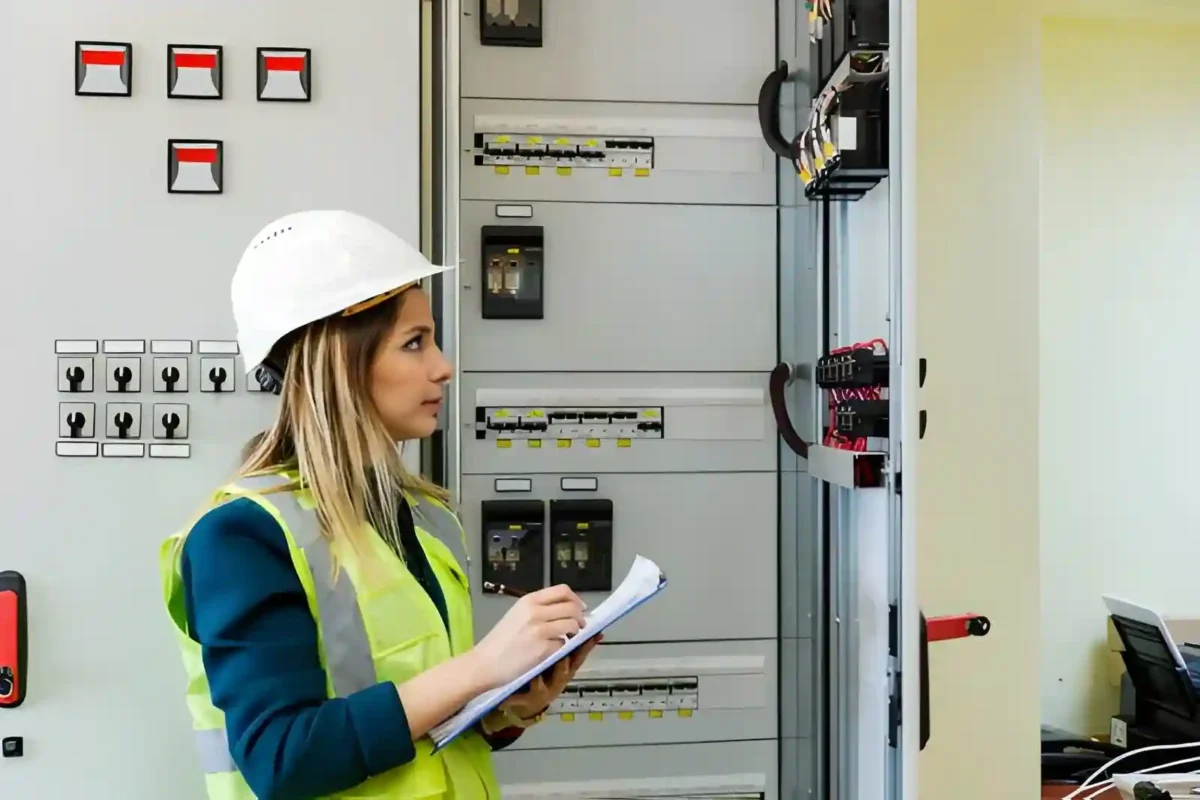
The inspection scope covers all fixed electrical components within the buildings. Assessments focus on safety rather than energy performance or appliance operation. Inspectors examine distribution equipment, wiring integrity, and protective measures. Landlord commercial EICR reports detail observations from visual assessment and testing results. Each Landlord commercial EICR identifies deviations from current standards using recognized coding systems. Inspection protocols follow nationally accepted guidance for non-domestic installations. Industry statistics confirm that early identification of insulation defects reduces fire risk. Reports also note limitations or access restrictions encountered during inspection. Findings guide prioritization of corrective work. Documentation compliance audits and internal safety reviews across commercial properties.

Who Can Carry Out a Commercial EICR?
Competence remains the central requirement for electrical inspection work. Inspectors must demonstrate technical knowledge and practical assessment capability. Accreditation schemes recognize individuals with appropriate qualifications and experience. Landlord commercial EICR validity depends on the inspector’s competence and reporting accuracy. Authorities may challenge Landlord commercial EICR reports produced without recognized credentials. Professional oversight ensures alignment with current wiring standards and guidance notes. Industry enforcement data highlights higher fault detection rates when inspections occur under accredited schemes. The selection of qualified inspectors protects report integrity. Documentation from recognized professionals supports regulatory confidence and insurance acceptance.
| Property Type | Typical Inspection Scope | Estimated Cost Range |
|---|---|---|
| Small commercial unit | Single distribution board, limited circuits | £150 – £300 |
| Medium commercial building | Multiple boards, standard fixed wiring | £300 – £600 |
| Large commercial building | Complex systems, high circuit volume | £600 – £1,200 |
| Industrial or high-load site | Heavy-duty equipment, extensive testing | £1,200 – £2,500 |
| Multi-unit property | Shared supplies, multiple occupancies | £800 – £2,000 |
What Happens If You Fail an EICR?
Unsatisfactory outcomes indicate identified safety concerns requiring action. Report codes highlight urgency and remediation priorities. EICR failure does not prohibit property use automatically but signals risk exposure. Prompt response to Landlord commercial EICR findings reduces enforcement escalation. Corrective work should follow qualified electrical recommendations. Verification testing confirms resolution of identified issues. Enforcement statistics show reduced penalties where remedial action occurs without delay. Updated documentation restores compliance status and confidence. Structured response plans limit operational and legal consequences.
Risk Assessment and Electrical Safety in Properties
Electrical inspections integrate with broader safety management systems. Risk assessments identify risk and control measures across property environments. EICR contributes technical evidence to risk evaluation processes. Findings from Landlord commercial EICR reports inform prioritization within safety action plans. Fire authority data confirms that integrated safety management reduces incident frequency. Business EICR inspection outcomes complement fire risk and health and safety assessments. Coordinated documentation strengthens compliance narratives. Risk-based maintenance planning for sustainable property management objectives.
Insurance Implications of Having a Valid EICR
Insurance frameworks assess risk based on documented safety controls. Electrical inspection records influence underwriting confidence. Landlord commercial EICR demonstrates proactive risk management. Insurers may request Landlord commercial EICR reports following incidents or during renewal reviews. Absence of documentation increases claim scrutiny. Industry loss data links documented inspections with improved claim outcomes. Compliance records financial protection strategies. Maintaining valid reports strengthens insurer trust and liability positioning.
Future Trends in Commercial Electrical Safety Compliance
Regulatory focus continues to shift toward preventative compliance models. Data-driven maintenance and digital reporting gain prominence. Landlord commercial EICR processes increasingly integrate with electronic compliance platforms. Standardization enhances report transparency and accessibility. Industry forecasts indicate greater alignment between electrical safety and fire prevention strategies. Continuous professional development supports evolving inspection practices. Ongoing adaptation ensures compliance frameworks remain effective and enforceable across commercial property sectors.
Frequently asked questions.
Conclusion
Effective electrical compliance, safety, continuity, and regulatory alignment across commercial properties. Landlord commercial EICR provides structured evidence of system condition and responsible oversight. Documentation from Landlord commercial EICR inspections supports enforcement reviews, insurance confidence, and long-term asset protection. Clear reporting enables early fault identification and planned corrective action. Industry data continues to link structured inspection regimes with reduced electrical incidents. Compliance information improves expert asset Business EICR inspection standards and operational flexibility. Power protection is a moderate responsibility in commercial environments, and dependent control mode strengthens accountability, risk manipulation, and sustainable asset management.